
Dolce & Gabbana’s haute couture at Palazzo Reale: a tribute to Italian style
‘From the heart to the hands’ is the new Dolce & Gabbana exhibition that enchants the public at Palazzo Reale in Milan. Inaugurated in April,



There are moments when fashion reveals itself in its most authentic dimension: not merely as an aesthetic expression, but as a cultural language, a vision, and a responsibility.
It is within this space that “From Thread to Future: How a Garment is Born and Transformed” came to life, a dialogue organized by Daema, with the participation of The Woolmark Company, the software company Sait, and Confindustria Bergamo, on March 31 at the “P. Paleocapa” Technical Industrial Institute in Bergamo. An open conversation with the students of the Textile Fashion course, where sustainable fashion and the textile supply chain, attentive to compliance with new European regulations, become living material, a space for discussion and shared creativity.
In a context where luxury is evolving toward a new consciousness, amplified by recent European regulations¹, the transmission of knowledge transforms into a deliberate act of creative awareness.
Students received the content with attentive and engaged eyes, reflecting a remarkably mature understanding of the circular economy. Classroom experiments proposed by teachers—as part of the curriculum—from natural dyeing to material research and hand weaving—were reinterpreted by the students with enthusiasm and genuine curiosity, demonstrating a generation capable of blending technical skill with sensitivity.

“The dialogue with young people opens up unexpected perspectives, often freer from pre-established patterns,” observes Daniela Manzoni, CEO & Co-Founder of Daema. “It is within this exchange that a new grammar of fashion emerges, ready to be embraced and articulated by the younger generation according to their vision of the future.”
In the contemporary landscape, every creation is born from a supply chain that is, above all, a narrative.
From the selection of raw materials – as in Daema’s approach, which favors natural fibers, particularly the fine merino wool explored with the students by Marco Rodigari, Education at The Woolmark Company – through to the garment’s production, each stage becomes an expression of conscious choice. A design journey aimed at creating pieces capable of evolving over time, destined, at the end of their first lifecycle, to transform into new objects, thus extending their value and longevity. The sustainable textile supply chain thereby establishes itself as a cultural code, capable of imbuing the product with depth.
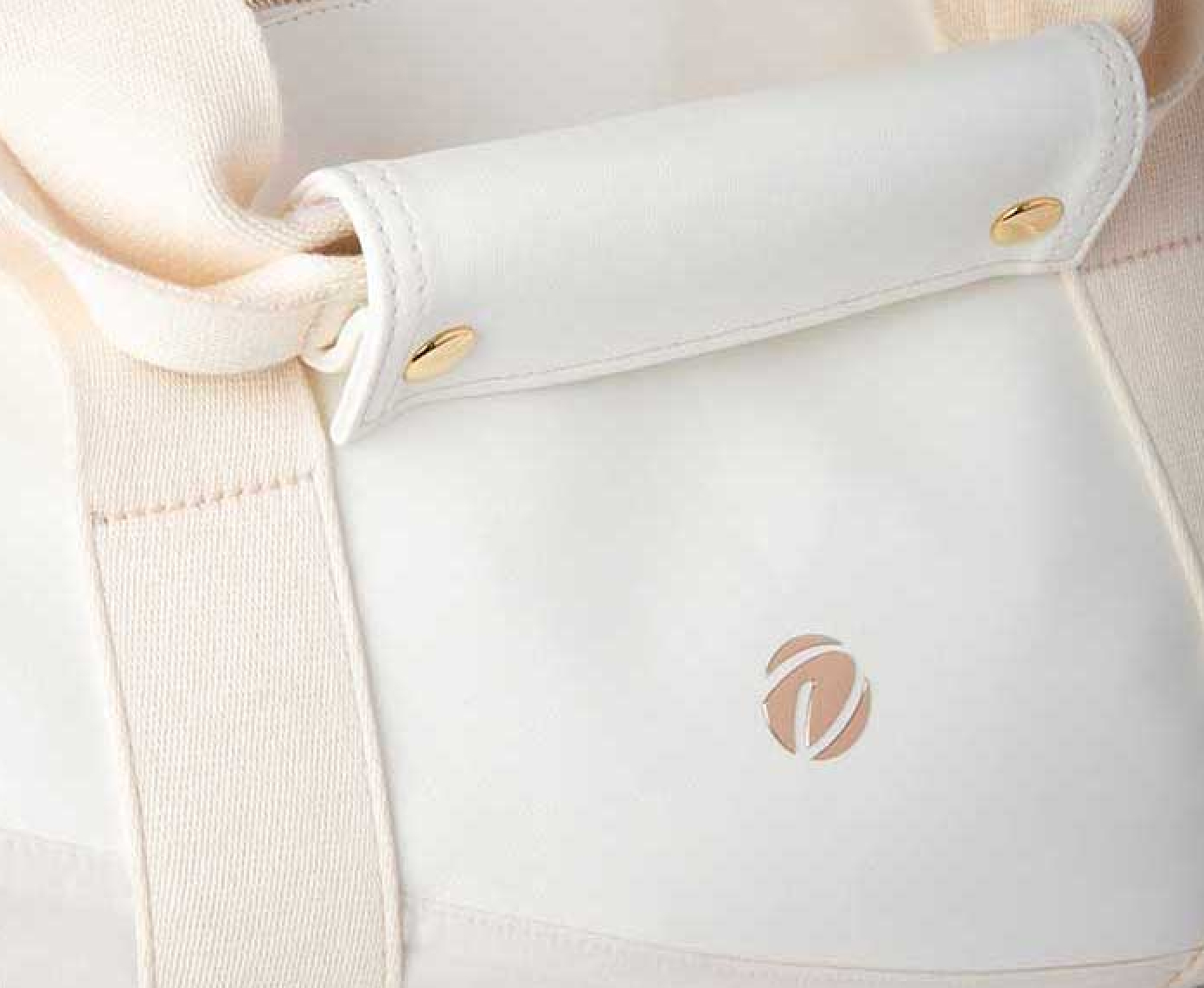
It is precisely through concrete examples that this vision takes shape. Such is the case of the Tombolo New Life bag, an emblematic Daema project embodying the principles of circular design: crafted from regenerated fabric from the Petalo garment in the Daema collection, the bag becomes a symbol of continuity and transformation.

An object that is born not simply from a material, but from a story that evolves. The fabric, reimagined and reinterpreted, embarks on a new life, demonstrating how design can extend the lifecycle of a product in its pre-consumer phase—not only without compromising its aesthetic value, but indeed enhancing it.
Making this vision possible is the integration of RFID technology into every Daema garment: an intelligent label that gives each product a unique identity and enables its traceability, ensuring its authenticity and history over time.
Explored in depth by SAIT during the meeting with students, through the insights of Giovanni Castaldo, Sales & Marketing Director, and Nicola Buffoni, Software Development Manager, this technology translates, in the language of contemporary luxury, into authenticity, traceability, and enduring value.
In contemporary fashion products, the technological component thus becomes an integral part of the design: an enabling element that enriches the garment with new functions, meanings, and layers of interpretation.
It is in this context that the Digital Product Passport² emerges as one of the most advanced expressions of transparency, also in terms of regulatory compliance, in sustainable fashion.
This topic was explored by Monica Meloncelli of the Environment Department at Confindustria Bergamo, who outlined its strategic role in redefining the dialogue between innovation, responsibility, and value.
Through the digital passport, every creation becomes traceable and interpretable, returning centrality to the supply chain and awareness to the consumer.
In dialogue with technologies such as blockchain, this tool opens a new relationship between authenticity and innovation, where value is no longer only perceived, but demonstrable.
For Daema, every interaction with students and younger generations represents an opportunity that goes beyond the educational dimension. It is an investment in building a fashion culture founded on responsibility.
From this perspective, the garment is no longer a final product, but part of a broader process. A system in which every choice, from material selection to design, from end-of-life to reuse, contributes to defining an aesthetics of awareness.
To explore Daema’s approach to sustainability and the textile supply chain in more detail, consult the Daema Sustainability Guide.
In dialogue with the students, the profile of the fashion of tomorrow took shape with clarity: open, sensitive, and capable of integrating innovation and values.
The new generations are no longer mere observers, but active protagonists of a transformation already underway. Young technicians and designers who, through their work, are beginning to rewrite the codes of contemporary fashion.
And perhaps it is precisely in this exchange – between experience and vision, memory and possibility – that the future truly takes form.
The dialogue continues even beyond the event: discover how the media covered the initiative dedicated to sustainable fashion and the textile supply chain.
Read the article on L’Eco di Bergamo, 30 Marzo 2026
Read the article on BergamoNews, 31 Marzo 2026
Explore further in the newsletter of Confindustria Bergamo, 31 Marzo 2026
NOTE:
1 Specifically, Regulation (EU) 2024/1781 on the eco-design of sustainable products and the Extended Producer Responsibility (EPR) principle established by Directive 2008/98/EC and related sectoral legislation.
2 The Digital Product Passport falls under the European Ecodesign for Sustainable Products Regulation (ESPR) framework and will gradually be introduced in the textile sector in the coming years. Its adoption for fashion products is expected around 2026–2027, aiming to ensure transparency, traceability, and circularity throughout the product’s lifecycle.

‘From the heart to the hands’ is the new Dolce & Gabbana exhibition that enchants the public at Palazzo Reale in Milan. Inaugurated in April,

Discover the harmony of female well-being, elegance, and sporting performance in the Wellness Café Woman Padel Cup in Bergamo, an extraordinary event celebrated in collaboration with Daema. Rewarding the players’ determination with the Natural WoolFeeling collection, this initiative transcends competition, embracing holistic balance and sustainable luxury.

These are some of the questions that non-professional athletes often ask themselves during a competition or even during an informal game. The gaming experience, whether

On the occasion of the 2nd Tino Sana Grand Tour which took place on 22 October at the Bergamo L’Albenza Golf Club, we had the